

Quick answer
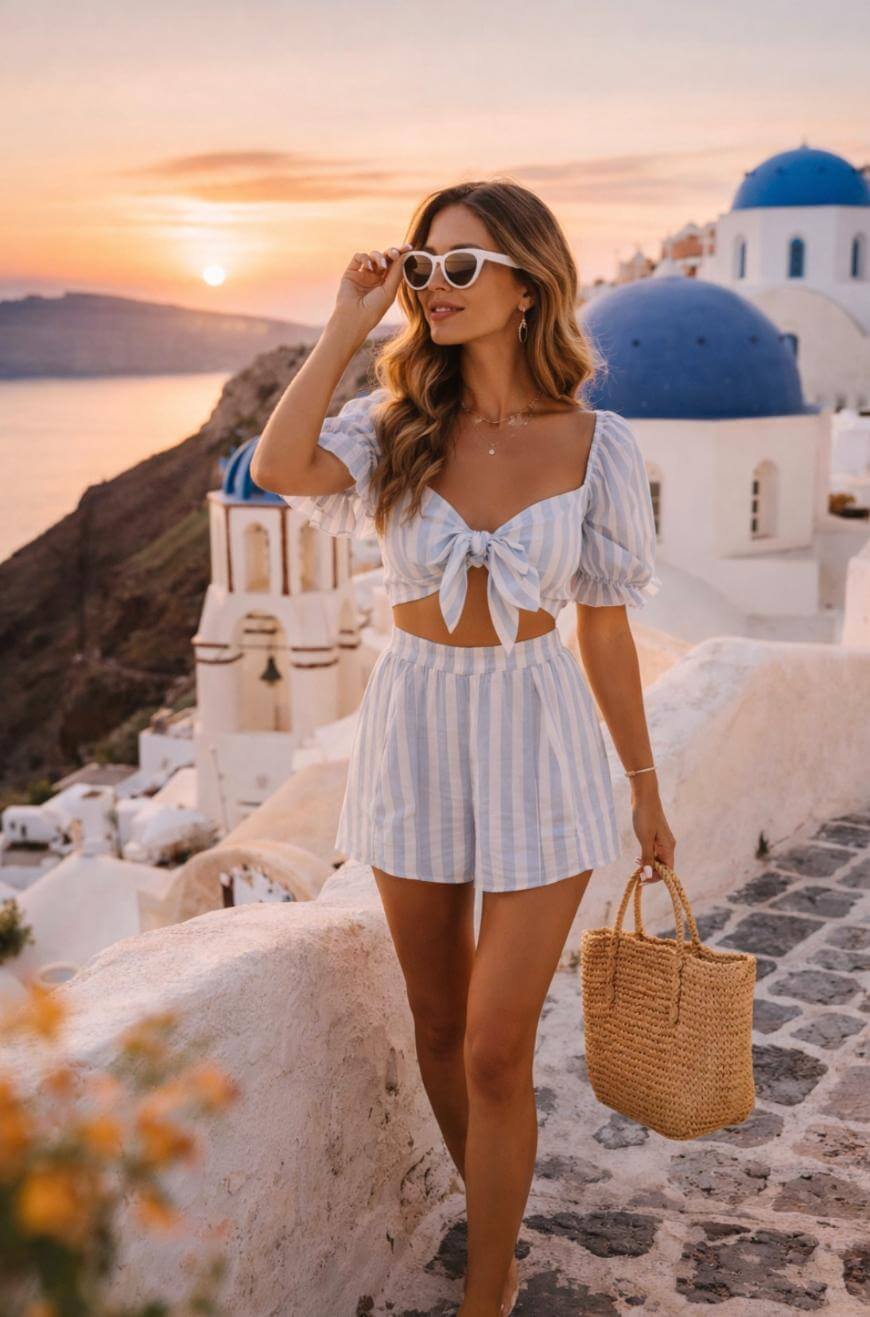
Light, breathable fabrics in white, cream, and soft pastels photograph best against Santorini's iconic blue domes and whitewashed walls. Linen and cotton blends handle the island's heat and wind without clinging or wrinkling. Flowing dresses and separates work well for cobblestone villages, while structured swimwear and cover-ups suit the volcanic beaches. Closed-toe espadrilles or leather sandals with ankle support navigate uneven caldera paths more safely than slides.
The Cycladic sun reflects off whitewashed plaster with an intensity that turns midday into a natural softbox. Clothing choices for Santorini split into two priorities: how the outfit photographs against high-contrast backdrops, and whether it handles eight hours of walking across marble, volcanic rock, and uneven stone. Flowing silhouettes in natural fibers dominate the visual vocabulary of the island. Linen maxi dresses, wide-leg linen trousers, and cotton voile tops move with the Aegean wind and avoid the cling of synthetic blends. White and cream tones create clean separation from the blue-domed churches of Oia and Firostefani, while terracotta, sage, and powder blue introduce warmth without competing with the architecture. Deep jewel tones—navy, emerald, burgundy—photograph well at sunset but can flatten under the noon sun. Santorini outfit ideas that work across multiple settings favor layering: a linen shirt over a slip dress, a cotton wrap that doubles as a beach cover-up. The island's terrain imposes practical constraints. Oia's marble steps, polished smooth by foot traffic, become slick after a morning hose-down. Fira's caldera path includes gravel switchbacks and exposed rock. Red Beach requires a ten-minute scramble over loose stone. Footwear with a closed toe and secure strap—espadrille wedges, leather gladiator sandals, canvas sneakers—handles the variation better than slides or mules. Fabric weight matters as much as style; anything heavier than midweight linen traps heat, and anything sheer risks transparency under direct sun. Accessories serve function before decoration. Wide-brimmed straw hats provide shade and frame portraits; oversized sunglasses reduce glare off whitewashed walls. A crossbody bag in woven straw or canvas keeps hands free for staircases and leaves no strap marks on sun-exposed shoulders. Gold-toned jewelry—delicate chains, hoop earrings—catches light without the harshness of silver against sun-bleached stone.
“The Cycladic sun reflects off whitewashed plaster with an intensity that turns midday into a natural softbox.”
Best Time of Day for Santorini Outfit Ideas
The best arrival window is 07:00–10:00, which offers optimal natural light for photography and lower crowds before peak tour hours. Arriving during this period provides the quietest environment for capturing specific outfit silhouettes and textures without obstruction.
Early Spring (April–May)
Moderate crowdsMild temperatures (15°C–22°C)
Ideal for layering and light fabrics before the summer heat rises.
Peak Summer (June–August)
Very high crowdsHot temperatures (25°C–30°C)
Requires breathable materials and sun protection for outdoor photography sessions.
Autumn (September–October)
Decreasing crowdsWarm temperatures (20°C–26°C)
Consistent light allows for diverse outfit choices during the shoulder season.
Weekday Mornings
Minimal crowds—
The quietest time to utilize the 07:00–10:00 arrival window for photography.
Verdict: For the highest flexibility in outfit styling and photography conditions, plan your arrival between 07:00–10:00 during the months of April or October.
Selecting Santorini Outfit Ideas for Iconic Photo Spots
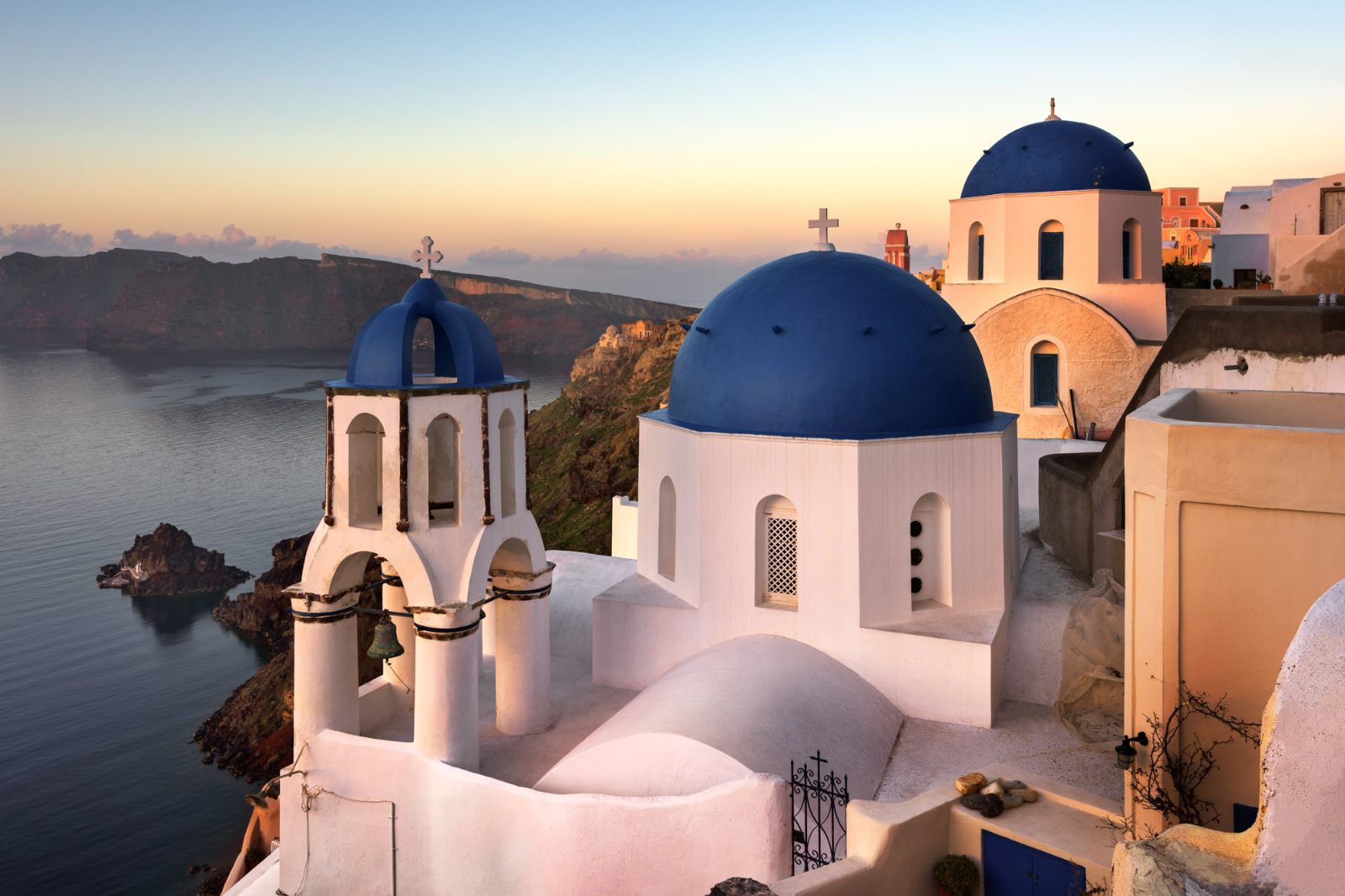
Oia Blue Dome Viewpoint
Position yourself on the path above the domes to capture the contrast between blue roofs and bright fabric.
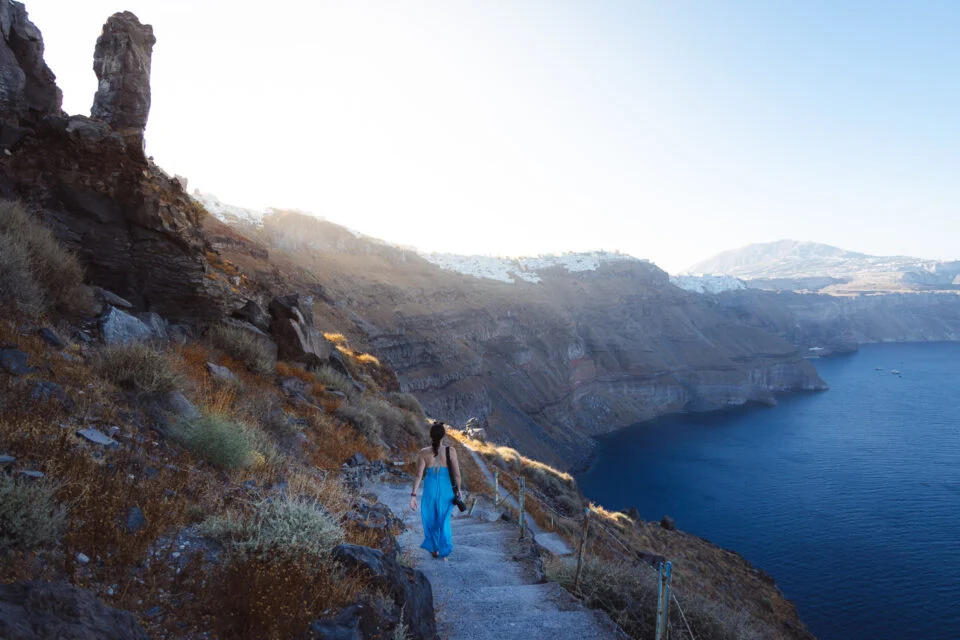
Imerovigli Skaros Rock Path
This trail offers a rugged volcanic backdrop that complements flowy dresses in solid colors.
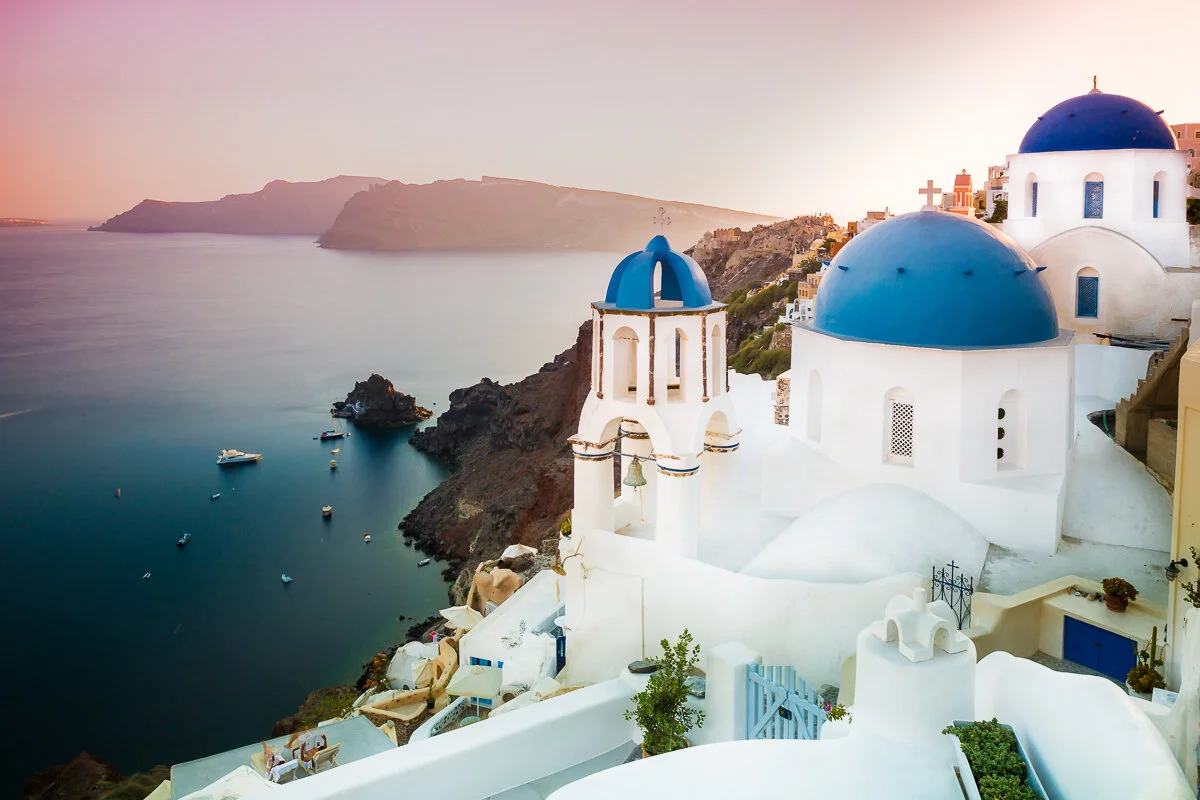
Three Bells of Fira
Frame the iconic blue-domed church against the caldera view from the main walking path.
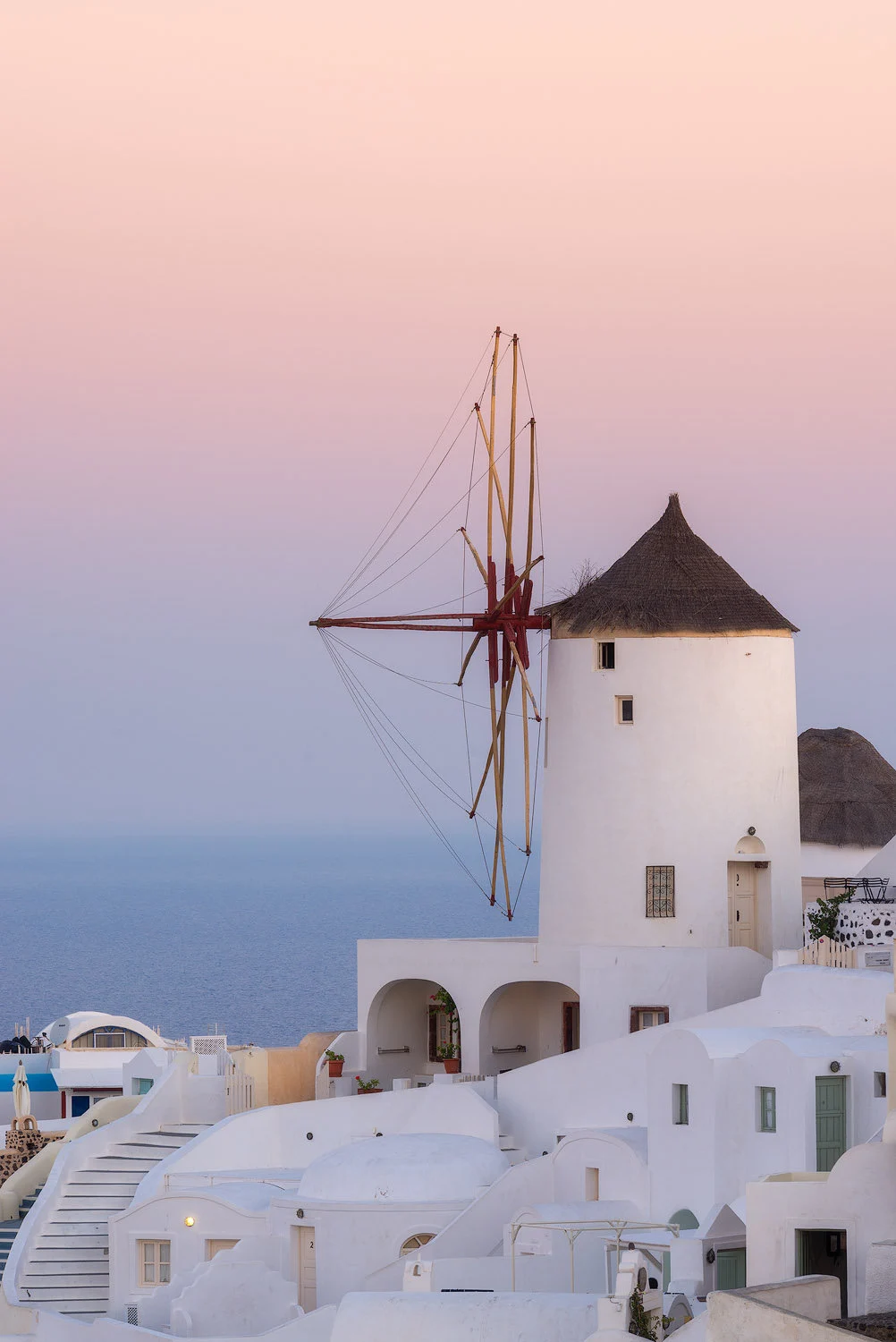
Oia Windmill Terrace
Capture the silhouette of the traditional windmills behind subjects wearing vibrant or white attire.
Essential Etiquette for Santorini Outfit Ideas
Santorini's churches and monasteries require modest dress for entry, while the island's cobblestones and steep paths demand practical footwear choices. Respecting local customs ensures access to sacred sites and comfortable exploration.
Do
- Cover shoulders and knees when entering churches or monasteries
- Wear closed-toe shoes with grip for climbing Santorini's steep steps
- Carry a light scarf or shawl to meet dress requirements
- Choose breathable fabrics that maintain modesty in warm conditions
- Layer outfits to adapt between beach areas and village visits
Don't
- Don't wear beachwear or revealing clothing in religious sites or villages
- Don't rely solely on sandals for exploring steep caldera paths
- Don't assume casual resort attire is appropriate for all locations
- Don't enter sacred sites with bare shoulders or short hemlines
- Don't wear high heels for walking between Fira and Oia
Santorini Outfit Ideas Checklist for Comfortable Exploring
Santorini's cobblestone paths, steep caldera steps, and uneven terrain demand practical footwear and gear that balance style with function.
-
Pack sturdy wedge sandals or block heels — Cobblestones and stairs make stilettos impractical and unsafe for extended walking.
-
Bring flat sandals for backup — Long days exploring villages require foot relief between photo sessions.
-
Carry a light crossbody bag — Keeps hands free for navigating steep steps and uneven surfaces safely.
-
Include a wide-brimmed hat — Strong midday sun reflects off white buildings, increasing exposure risk.
-
Layer a linen wrap or shawl — Temperatures drop in evening and wind picks up along cliffsides.
-
Wear broken-in footwear only — New shoes cause blisters on Santorini's extensive walking routes between villages.
Check availability
Frequently asked questions about santorini outfit ideas
Everything you need to know about santorini outfit ideas